BirthdayBot blog
Slack Kudos that feel genuine: employee recognition playbook
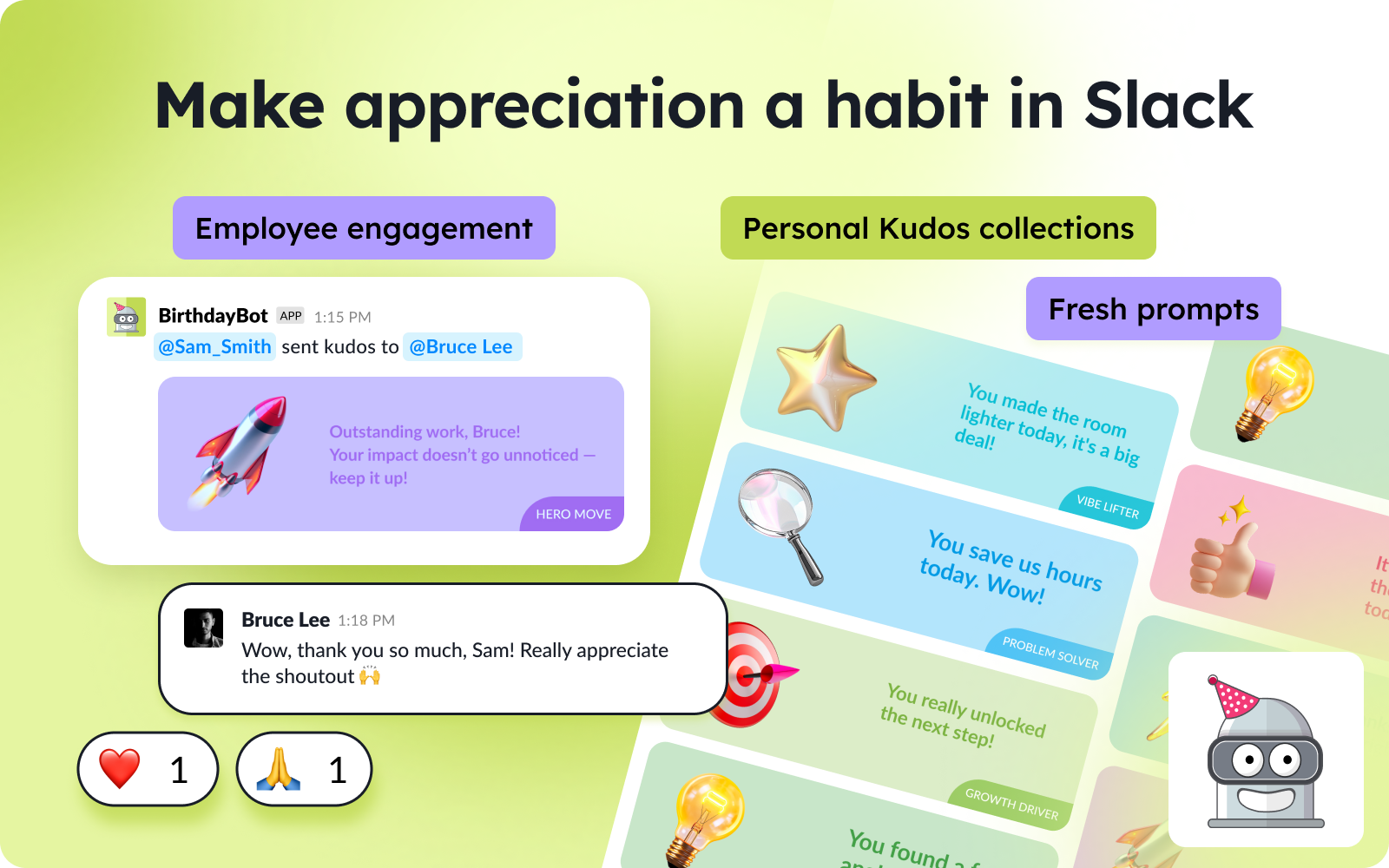
Recognition usually fails in one of two ways: it barely happens, or it happens in a way that feels stiff, forced, and weirdly performative. That is why employee recognition in Slack works best when it is not treated like a grand HR campaign. It works when it becomes a small, repeatable habit inside the flow of work.
Slack itself recommends creating a dedicated channel for appreciation, so teammates can post visible recognition that others can see and join. The point is to make workplace gratitude easier, more specific, and more normal in everyday team culture. And broader recognition research points in the same direction: peer recognition works best when it is frequent, meaningful, and easy enough to sustain during busy weeks.
This playbook shows how to run employee recognition in Slack in a way that feels human, not corporate: one simple channel, a few message patterns, lightweight rituals, and optional rewards that support the moment instead of replacing it.
Why most recognition fails (and what actually works)
Most recognition fails because the system around it creates friction.
For example,
It is too rare, so it feels ceremonial instead of natural. It is too vague, so “great job!” lands with a thud. It is too top-down, so managers do all the talking while peers stay quiet. Or it is too complicated, so the whole thing disappears the moment the team gets busy.
That is why peer-to-peer recognition matters. When appreciation is easy for coworkers to give in the moment, it becomes part of how the team works, not just something HR tries to revive once a quarter. Recent recognition guidance from Achievers and Workhuman makes the same point: the strongest recognition habits are frequent, meaningful, aligned to values, and simple enough to maintain.
So the goal is not to build a heavy “recognition program” first. The goal is to build a culture of recognition through habits people actually want to use.
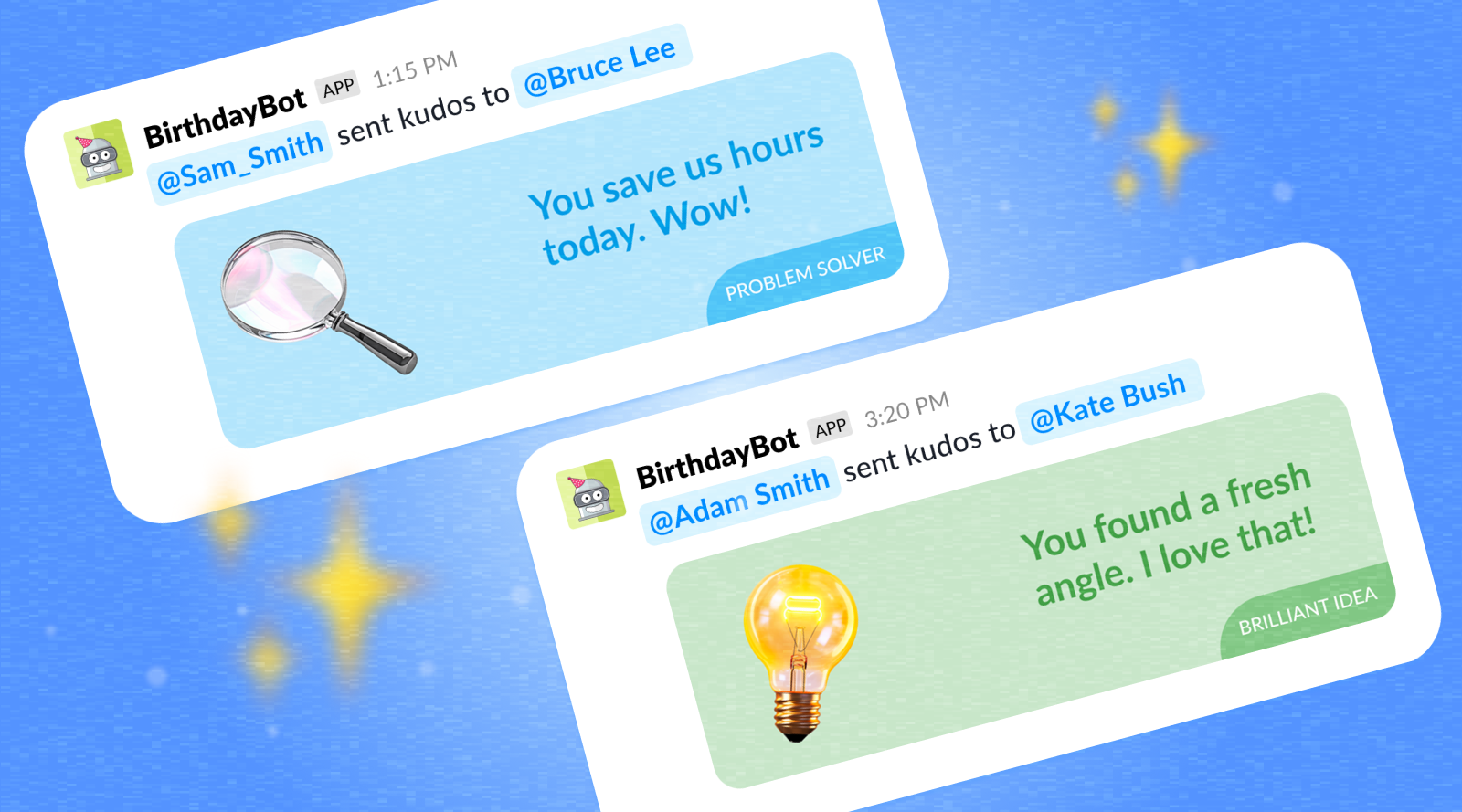
The 5 rules for Kudos that feel real, not corporate
1) Be specific about the behavior
The fastest way to make recognition feel empty is to make it generic.
⛔Bad:
“Great work this week!”
🆗Better:
“Thanks for jumping into the customer issue on Tuesday and simplifying the explanation for the client.”
😊Best:
“Thanks for jumping into the customer issue on Tuesday and rewriting the handoff note. It saved the support team a lot of back-and-forth.”
Good recognition messages for coworkers name what happened, why it mattered, and what it says about how the person works.
2) Make it timely
Recognition has a short shelf life. Same day is ideal. Same week is still strong. Monthly recaps can work, but they should not be your only method.
When appreciation arrives close to the moment, it feels earned and believable. When it arrives three weeks later, it feels like paperwork.
3) Show impact
Specificity matters, but impact is what gives the message weight.
Say who benefited:
the customer
the teammate who was blocked
the project timeline
the launch quality
the team’s clarity
the speed of execution
This turns praise into evidence. It is one of the core employee recognition best practices because it helps people see not just that their effort was noticed, but why it mattered.
4) Make it visible, but not mandatory
Public recognition is powerful because it teaches the team what good work looks like. It also helps build shared norms around gratitude at work.
But public should not mean forced. Some moments are better in a thread. Some are better in a direct message. Some people are comfortable with visible praise; others value a quieter note.
The best approach is simple: encourage public Kudos, allow private appreciation where appropriate.
5) Tie it to values lightly
Values can help recognition feel more meaningful. They can also make it sound scripted if overused.
A light touch works better:
“That was strong ownership.”
“That is what thoughtful collaboration looks like.”
“You made the customer experience simpler.”
No one wants a paragraph that reads like brand training. Keep the value language natural.
The easiest Slack setup: one channel, one habit
If you want Slack kudos to stick, make the setup boringly simple.
Slack recommends creating a dedicated kudos channel so appreciation has a visible home and becomes part of how the company communicates. That can be #kudos, #gratitude, #wins, or whatever fits your team’s tone. The key is consistency, not clever naming.
Start with this:
Create one channel:
#kudos
#gratitude
#team-wins
Pin lightweight posting guidelines:
Be specific
Mention impact
Keep it kind
Public by default, private when needed
Then add BirthdayBot to this channel and go to web settings to enable Kudos for this channel.
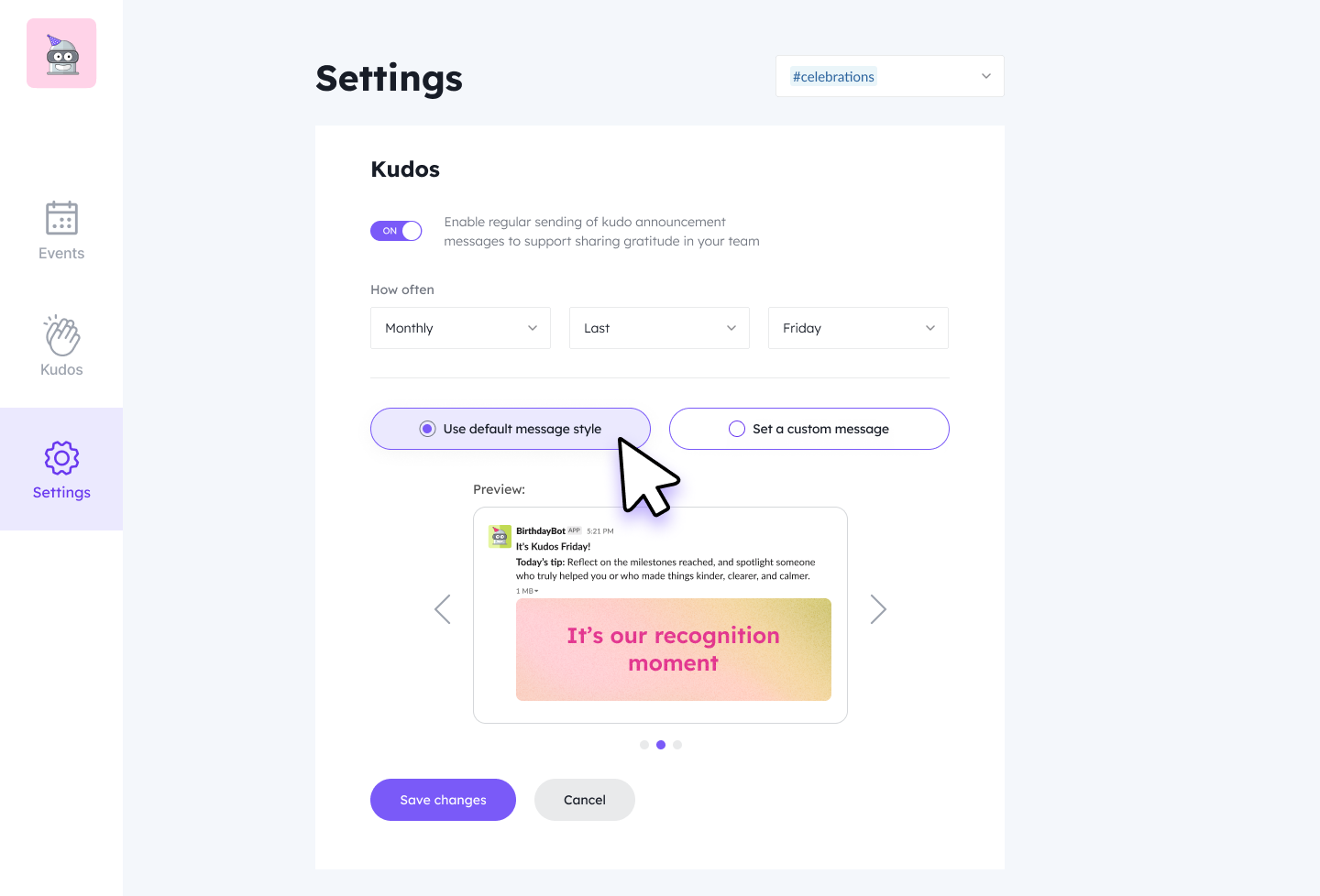
That is the easiest way to create a kudos channel in Slack that people will actually use.
Copy-paste templates: good vs. great Kudos messages
Here are practical kudos message examples for coworkers you can use right away.
Template 1: Everyday excellence
⛔Bad:
“Nice work today!”
🆗Better:
“Thanks for handling the handoff so smoothly today.”
😊Best:
“Thanks for handling the handoff so smoothly today. You caught the missing context and cleaned it up fast. That saved time and reduced confusion for the team.”
Structure to remember:
What you did + what changed + what it signaled
Template 2: Cross-team collaboration
⛔Bad:
“Shout-out to Alex for helping marketing.”
🆗Better:
“Shout-out to Alex for helping marketing get the launch copy over the line.”
😊Best:
“Shout-out to Alex for jumping in with marketing during the launch crunch. You translated the product details into something clear, answered questions fast, and helped the team ship on time.”
Template 3: Invisible work
⛔Bad:
“Thanks for everything you do.”
🆗Better:
“Thanks for keeping things organized behind the scenes.”
😊Best:
“Thanks for keeping the project organized. The updates, reminders, and follow-ups kept the whole team moving. Tons of invisible work became visible because of you.”
Template 4: New hire welcome moment
⛔Bad:
“Welcome to the team!”
🆗Better:
“Welcome to the team, great to have you here.”
😊Best:
“Welcome to the team, Maya. You already improved the draft onboarding doc! That is an amazing start, and we are glad you are here.”
This is a strong way to combine a new hire welcome message with early recognition. It helps new teammates feel seen for contribution, not just presence.
Template 5: Customer-focused win
⛔Bad:
“Great customer save.”
🆗Better:
“Great job helping the customer get unstuck.”
😊Best:
“Great job helping the customer get unstuck so quickly. You kept the tone calm, simplified the issue, and moved it forward without drama. Wow!”
Rituals that make Kudos stick, without adding meetings
Recognition should live inside daily work, not create more admin. Slack’s own guidance emphasizes making appreciation visible in-channel, and recognition best-practice sources consistently favor regular, lightweight habits over bloated systems.
Pick one ritual and run it for a month.
1) 3 Kudos Friday
Every Friday, ask people to post three short shout-outs in #kudos.
That is enough structure to create momentum, but not enough pressure to make it annoying.
2) Launch-day Kudos
After a release, event, campaign, or milestone, open a Kudos thread.
Prompt:
“Who made this smoother, clearer, faster, or less stressful?”
This works especially well because it catches visible and invisible contributions.
3) Customer win to Kudos thread
Any time a customer outcome goes well, start a thread naming the people behind it:
who solved the issue
who clarified the process
who helped unblock
who improved the experience
This is one of the best peer recognition ideas for remote teams because it connects appreciation directly to real work.
When and how to add gift cards without cheapening gratitude
Gift cards can work well because they are flexible and easy to personalize, especially for distributed teams. Recognition and rewards sources usually emphasize choice and personalization as reasons gift cards can land well when they are used thoughtfully.
The right pattern is:
Kudos first, reward second.
Use employee gift cards for moments like:
a new hire’s first visible win
a project milestone
a peer who took on high-effort, invisible work
a culture-carrying moment like mentorship, onboarding support, or unblocking others
Used this way, gift cards for coworkers feel like a meaningful amplifier, not a substitute for appreciation.
For teams using BirthdayBot, this is the sweet spot: keep day-to-day gratitude lightweight and social, then use rewards selectively for moments worth marking.
Read more about Gift cards in BirthdayBot.

A simple do / don’t checklist for managers and HR
If you want a lightweight employee recognition program in Slack to survive, keep this list close.
Do
Model the behavior. Leaders should post first.
Spread recognition across teams, not just within obvious friend groups.
Recognize invisible work, not just loud wins.
Keep messages human and specific.
Make the system easy enough for busy weeks.
Don’t
Force participation.
Turn everything into a points contest.
Make people ask for approval before recognizing someone.
Only reward extroverts or highly visible work.
Let the channel become a stream of generic compliments.
This is where a good Slack HR tool for employee recognition helps: by reducing friction.
Make recognition automatic, without making it robotic
The best employee recognition in Slack does not need a giant rollout.
BirthdayBot’s new Kudos feature is built for exactly that. Workspace admins can enable weekly or monthly prompts in a Celebration Channel, choose default or custom reminder content, and make recognition easier with templates that teammates can personalize. People can send Kudos publicly in a thread or privately by direct messages, and each person gets a personal collection of the Kudos they have sent and received in the BirthdayBot web app. That makes appreciation easier to start, easier to sustain, and easier to revisit over time.
So the practical play is simple: start with a channel and a habit. Then use BirthdayBot to make recognition more consistent without turning it into another chore.
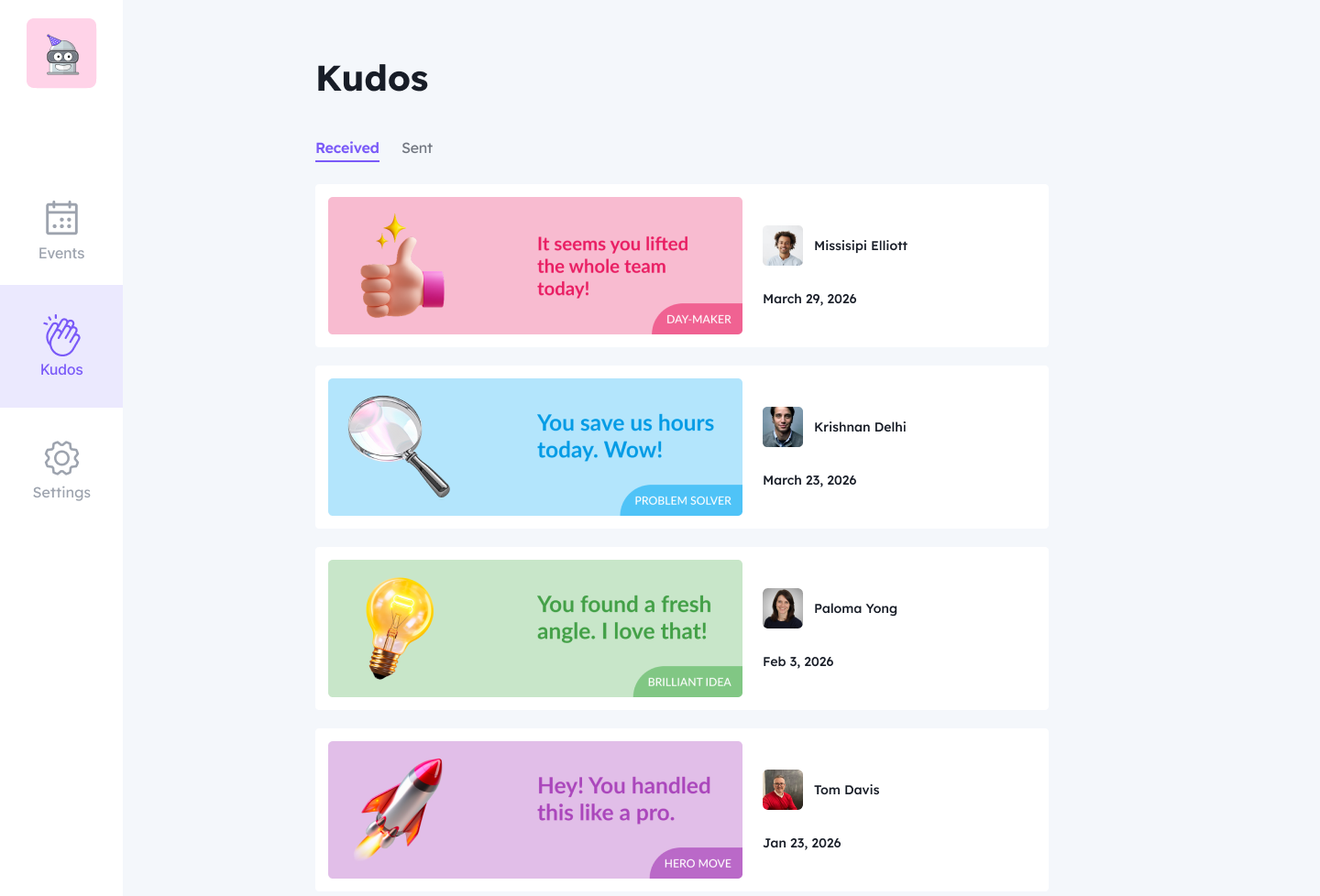
Use Kudos first + Add occasional rewards second + Keep it human the whole way.
FAQs
What is peer-to-peer recognition?
Peer-to-peer recognition is appreciation shared between coworkers, not just from managers to direct reports. It works best when it is timely, specific, and easy to do in the flow of work.
How do you give kudos in Slack?
The simplest method is to install BirthdayBot, start a dedicated Slack channel for appreciation, schedule weekly Kudos reminders, and keep it visible so people can click the button and create a nice colorful shoutout for a coworker to share gratitude and share a thank-you moment.
Should you create a dedicated kudos channel in Slack?
We recommend it. If not, you can use your BirthdayBot Celebration Channel for that (where birthdays, work anniversaries, and custom celebrations are posted). However, a dedicated channel gives appreciation a clear home, creates a visible log of gratitude, and makes it easier for others to participate. That is the setup Slack recommends.
What are good kudos message examples for coworkers?
Good messages are specific, timely, and impact-based. A strong formula is: what the person did, why it mattered, and who it helped.
How do you recognize remote employees consistently?
Use lightweight rituals inside the tools people already use, such as Slack. Weekly BirthdayBot prompts, launch-day threads, and customer-win shout-outs are easier to sustain than formal monthly recognition events. This matches broader best-practice guidance that recognition should be frequent and embedded into work.
When should you attach rewards or gift cards to recognition?
Use them for milestone moments, not every thank-you. Gift cards work best as an occasional layer on top of meaningful appreciation, especially when choice and personalization matter.
Final thoughts
The best recognition systems do not feel like systems at all. They feel like a team that notices each other, says thank you often, and makes appreciation part of the way work gets done. That is why effective employee recognition in Slack starts small. A Slack channel, a recurring habit, a few thoughts without forcing, overengineering, and corporate tone.
When Slack kudos are specific, timely, and easy to give, they help build real workplace gratitude, stronger peer relationships, and a healthier team culture over time. And when you want more consistency, the right tool can support the habit without making it feel robotic.
BirthdayBot Kudos helps teams do exactly that by making peer recognition simple, visible, and easy to sustain through weekly or monthly prompts in Slack. Because the teams that build a culture of appreciation do not wait for the perfect program. They make recognition a habit.
and enable Kudos in the BirthdayBot web app
to start a weekly or monthly recognition ritual in your team's Celebration Channel🥳